Most yard flooding after a storm traces back to a few things: full gutters, downspouts that empty at the wall, blocked drains and low spots. You can check them in about ten minutes on a dry afternoon. Fix what you can, and note the rest for a contractor.
How do I know if my yard has a drainage problem?
Water tells you. Signs to look for:
- water that is still standing hours after rain stops;
- puddles in the same spot after every storm;
- soil or mulch washed out of a bed;
- wet or stained walls, or water at the garage door or in the crawl space;
- ground that slopes toward the house, not away.
Puddling in the same place repeatedly usually points to slope, settling or a blocked drain, not bad luck. If you see these signs, the checklist below finds the cause. Drainage is also the first thing we settle in any landscape design in San Jose, because every patio, wall and lawn depends on it.
The ten-minute checklist
- Gutters and downspouts. Clear leaves and debris. Make sure each downspout empties away from the house. The US EPA's stormwater guidance on redirecting downspouts says to send roof water to a lawn or garden where it can soak into the ground, and to consider local regulations and where the water will end up. More in downspouts and grading.
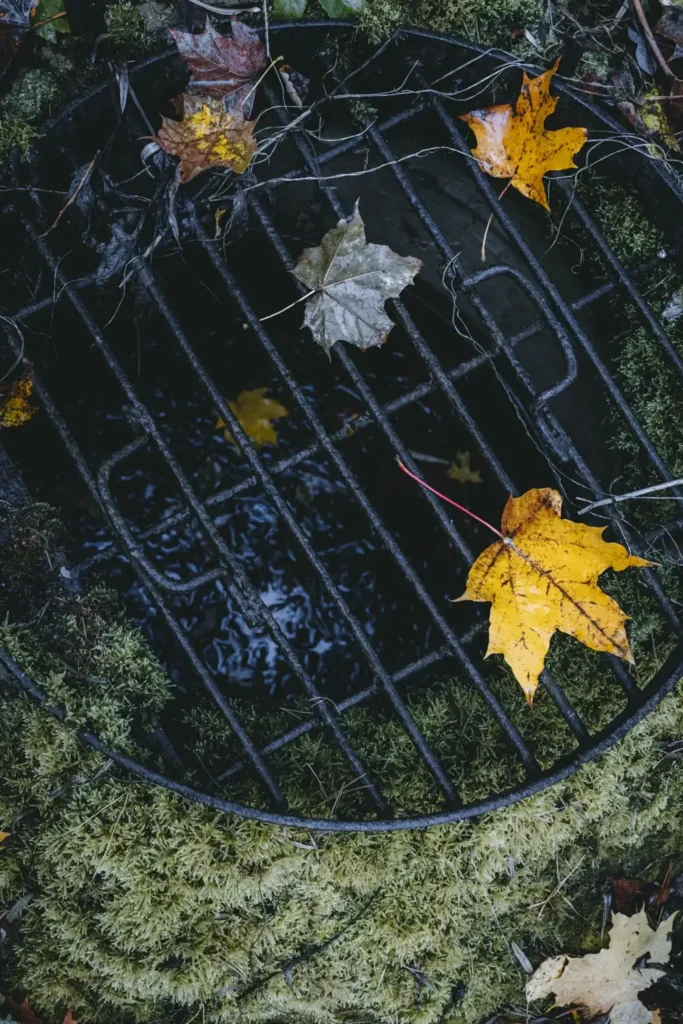
- Surface drains and catch basins. Lift the grates and clear leaves and silt. A blocked basin is a common cause of a flooded patio.
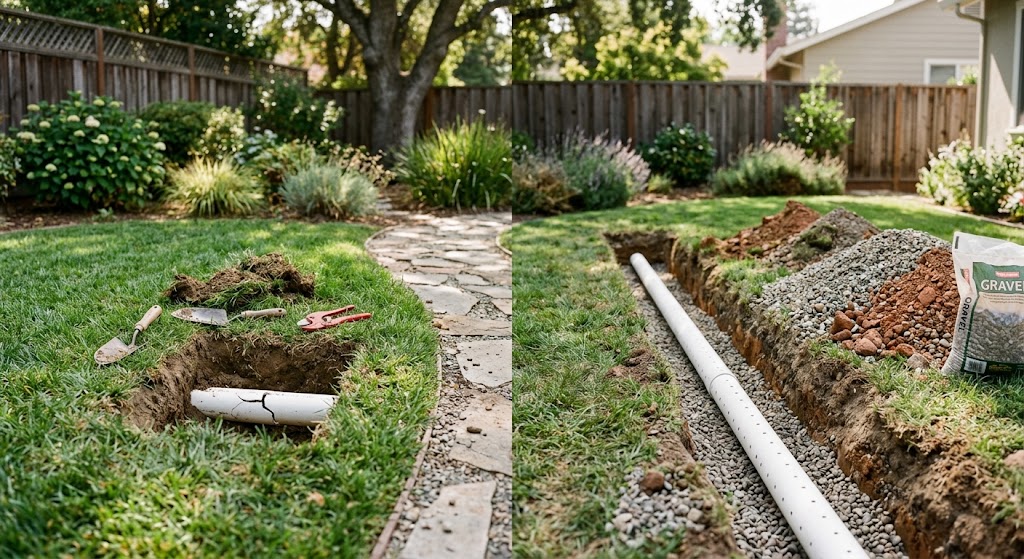
- Buried drain lines. Run a hose into the inlet. If water backs up or does not come out at the outlet, the line is clogged or broken.
- Soil next to the house. It should slope away from the wall. If it slopes toward it, water will follow.
- Low spots and bare ground. Note where water pooled in the last storm. Those spots need grading or a drain, not more topsoil.
- Outlets. Check the end of each drain pipe is clear and not buried by mulch or plants.
- Irrigation. An overwatered zone or a stuck valve adds water to ground that is already wet. We check irrigation before any trenching for this reason.
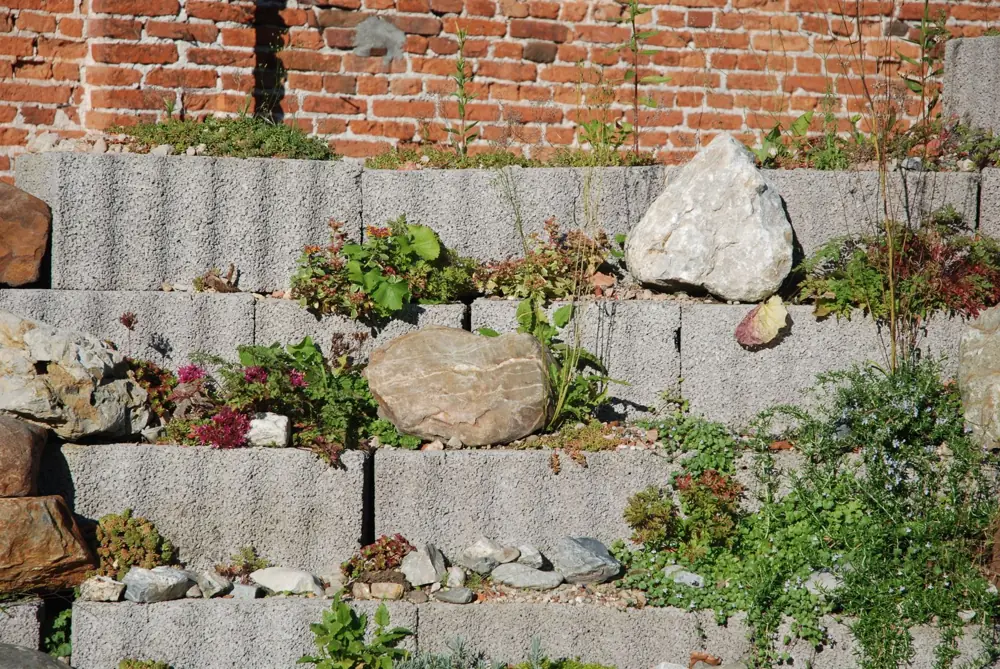
- Retaining walls. Look for staining, bulging or soil washing out at the base after rain. See retaining wall drainage.
What can I fix myself, and when should I call a contractor?
You can clear gutters, grates and outlets and move a downspout extension. Do it before a forecast storm, not during one.
Call a contractor when:
- water enters the garage, crawl space or house;
- standing water stays for days after rain;
- a buried line is broken or keeps backing up;
- a wall is leaning.
For a lasting fix, options include drainage systems such as French drains, trench and channel drains, catch basins, area drains and dry wells, plus regrading and swales. A camera inspection and jetting can show whether an existing line needs replacing before anyone digs.
Should I check my drains during a storm?
Watch, but do not work. Observing where water goes while it rains is useful; it is how we like to assess a yard, either during or right after rain. But clear drains and climb ladders from a dry, stable position in calm weather, not in wind and rain. Our flooded yard guide covers what to do in an emergency.
What does fixing yard drainage cost?
From our drainage page (last verified August 2026): a downspout extension runs $300 to $600 each, and a complete drainage system $5,000 to $15,000 typical. The itemized ranges for catch basins, dry wells and French drains are in downspouts and grading.
Cost depends on footage, depth, soil and where the water can go. A written proposal follows a free on-site assessment.
Do drainage repairs need a permit?
Most residential drainage work needs no permit. Walls are the usual exception. Under the City of San Jose's retaining wall rules, a wall taller than 2 feet, measured from existing grade, needs a building permit. A wall that supports a surcharge, or measures 4 feet or more from the bottom of the footing to the top, needs a Grading Permit from Public Works. Our drainage page adds that work changing drainage onto a neighbor's property, or tying into the municipal storm drain, can also need one. Details are in retaining wall drainage.
Before digging, call 811 for a utility locate; we do this on every job. We handle permits as part of the job.
Quick reference: what to check, and who does it
| Check | When | DIY or pro |
|---|---|---|
| Gutters and downspouts | Before the rainy season and after large storms | DIY |
| Grates, catch basins, outlets | Before storms | DIY |
| Hose test on buried drain lines | Once a year | DIY to test, pro to repair |
| Soil sloping toward the house | Once, then after any settling | Pro if regrading is needed |
| Irrigation overspray on wet ground | In the rainy season | DIY adjust, pro for valves |
| Water in garage or crawl space | Any time | Pro |
| Leaning or bulging wall | Any time | Pro |
After a storm, note where water pooled, how long it took to clear and where it came from (roof, slope, irrigation or a neighbor), and photograph any puddle still there next morning. That record lets a contractor see the pattern. Our yard flooding guide lists immediate steps when water is already in the yard.
Where JPM fits
JPM Landscape is a licensed contractor (CA Lic. 963784) with more than 30 years of work in San Jose and Silicon Valley. A typical residential drainage system takes about 2 to 5 working days; larger regrading takes 1 to 2 weeks. We test the finished system with you present.
Call (408) 636-6442 for a free estimate.
Sources
- https://jpmlandscape.com/drainage-systems/ (JPM drainage services, prices verified Aug 2026, permits, process; opened 17 Nov 2026)
- https://jpmlandscape.com/blog-yard-flooding-after-rain-san-jose-emergency-guide/ (JPM flooded yard guide; live page)
- https://jpmlandscape.com/landscape-design-san-jose/ (JPM landscape design; live page)
- https://emesa.ca/why-water-pools-on-driveways-and-what-to-do-about-it (standing water hours after rain as a warning sign; opened 17 Nov 2026)
- https://www.epa.gov/soakuptherain/soak-rain-disconnect-redirect-downspouts (US EPA, Soak Up the Rain: Disconnect / Redirect Downspouts; opened 17 Nov 2026)
- https://www.sanjoseca.gov/businesses/development-services-permit-center/start-your-project/single-family-duplex-properties/fences-retaining-walls (City of San Jose retaining wall permit rules; thresholds as opened and cited in rain-03 on 17 Nov 2026, my fetch returned 403)
- https://jpmlandscape.com/downspouts-and-grading-san-jose/ (JPM cost ranges, rain-02)
- Google Search Console, jpmlandscape.com, 90 days to 17 Nov 2026 (query list)