We help homeowners choose the right edging material and repair approach based on their landscape needs.
Redwood, Plastic or Composite Bender Board
Each material has a place, and the right one depends on how wet the spot is and how the edge will be used.
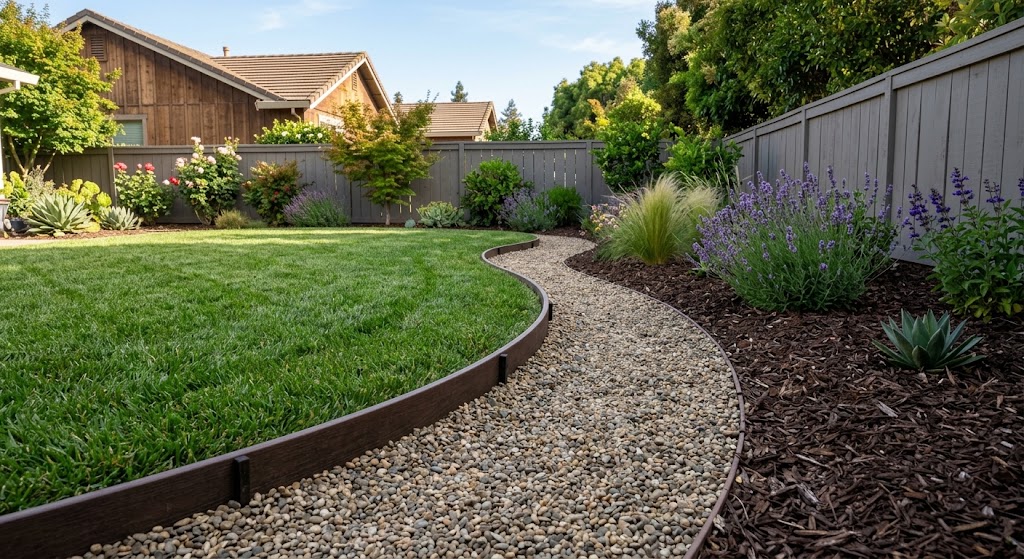
Redwood has a natural look that suits garden beds and older landscapes. It is the first to rot where it stays wet, so it works best away from sprinkler spray. Plastic will not rot, bends easily around tight curves and handles damp soil well, though it can turn brittle with years of sun, so we set it low and stake it firmly. Composite resists moisture and holds a curve with a cleaner finish, which makes it a good fit along lawns and turf where the edge is always visible.
What Makes New Bender Board Last
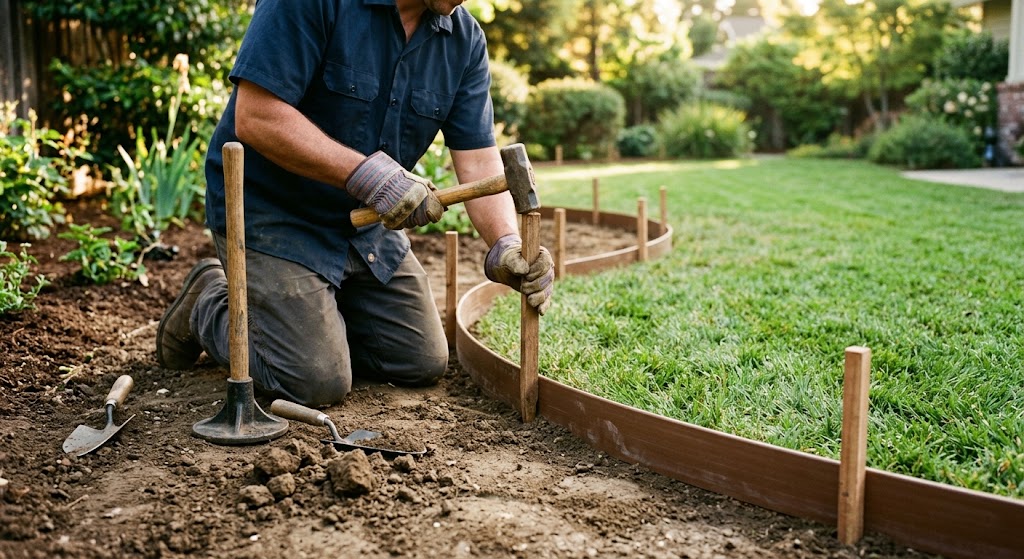
A new board only lasts if the cause of the old failure is dealt with. We set stakes at close, even spacing and drive them to the right depth, then compact the soil along the edge so rain does not wash it out. If sprinkler heads spray the board, we redirect them. If runoff pours across the edge, we correct it, with help from our drainage systems work when water is the real problem. Finally, we choose a material that suits the wetness and sun exposure of that spot.
Where Bender Board Is Not the Right Edging
Bender board is not a paver restraint. Pavers push outward under load, and they need a rigid edge such as PVC, aluminum or concrete. If your pavers are spreading and the joints are opening, see our interlocking pavers services instead.
Around artificial turf, bender board can work along curved beds, but a stronger nailer edge is often better where the turf is pulled tight. We look at how the area is used and tell you which edging fits. See our artificial turf page for installation details.
How Our Bender Board Replacement Process Works
- Inspect the edge. We walk the full run, check drainage and irrigation, and note where the edging failed and why.
- Mark the work area. We mark the sections that need repair or replacement, and the line the new edge will follow.
- Remove the failed edging. Old boards and stakes come out, along with loose debris and roots in the way.
- Prepare the soil. We trim the edge, correct the grade and compact the soil so the board has firm support.
- Set the new board. The new bender board is shaped to the curve and staked at even spacing, with the top edge set to the right height.
- Backfill and compact. Soil, gravel or decomposed granite is packed against the board so it stays put.
- Clean up and review. We clear the debris and walk the finished edge with you.
Why Bender Board Fails in San Jose
Bender board is a thin, flexible strip of redwood, plastic or composite held in place by stakes. It is made for curves and light-duty edging, which makes it easy to install and just as easy to damage when conditions are rough.
Signs Your Bender Board Needs Replacing
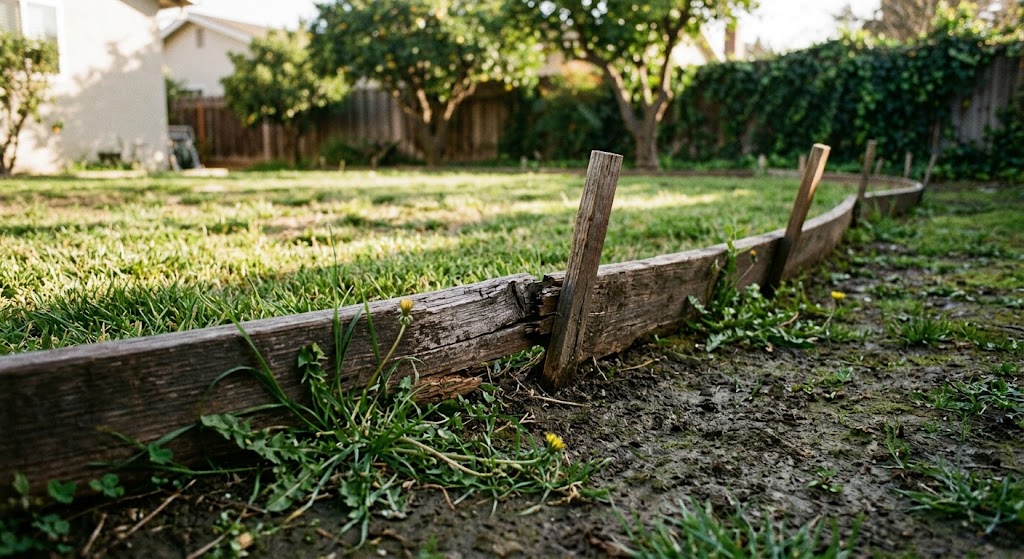
The clearest sign is soft, dark or crumbling wood. If a screwdriver sinks into the board, it has rotted. Splits along the grain and breaks at the stakes tell the same story, as do stakes that stick up above the board or no longer hold it upright.
Movement is the other group of warning signs. Sections may heave out of the soil and leave a gap underneath, or a smooth curve may turn lumpy and drift out of line. Once gravel, decomposed granite, mulch or turf infill spills past the edge, or grass and weeds creep across into beds and paths, the edging is no longer doing its job.
Spotting these early keeps the fix small. For a closer look, see our guide to bender board failure signs in San Jose.
What Causes Bender Board to Fail in San Jose
Moisture is the biggest culprit. Wood touching wet soil rots from the ground up, and sprinkler overspray keeps it wet all summer. Much of the Santa Clara Valley also sits on expansive clay that swells in winter and shrinks in summer, which slowly pushes stakes and boards out of position. Winter storms add to the damage by washing soil from behind and under the edging, so the board loses its support.
Daily wear does the rest. Mowers and string trimmers chip thin strips, and sun and age turn plastic brittle and split wood. Stakes spaced too far apart or driven too shallow let the board lean and bow. And sometimes the edging is simply asked to do too much, since bender board is not built to hold back pavers, heavy loads or steep slopes.
If you are new to the product, our explainer on what bender board is covers where it works well and where it does not.
Repair or Replace Bender Board?
A repair makes sense when the board is mostly sound and only a section has failed. We can reset leaning stakes, add stakes where the board has loosened, and swap out a broken run.
Replacement is the better call when the wood is rotting along its length, the plastic has turned brittle, or the edge has shifted in many places. Patching old material that is failing everywhere only buys a season or two. We tell you which one applies before any work begins.
What Affects Bender Board Replacement Cost in San Jose
Every yard is different, so the price depends on what we find when we see it. The length of the edging matters most: a short run is a small job, while a long perimeter around a lawn or bed is a bigger one. The material also changes the price, since redwood, plastic and composite each cost differently, and tight curves and detailed shapes take more time to set cleanly.
Site conditions add to the scope. Washed-out soil that needs rebuilding adds work, and old boards that are deeply set or tangled in roots take longer to pull. If water is the cause, correcting a drainage or irrigation problem becomes part of a lasting repair. Narrow side yards and long carry distances add time as well.
A repair that fixes the cause costs more up front than a quick patch, but it can help prevent the same edging problem from returning.
- Licensed and insured. California contractor license #963784, with a long record of local residential work.
- Recognized by homeowners. 12 Best of Houzz awards and 92 Houzz reviews averaging 4.9 stars.
- Local and familiar with the soil. We work across San Jose and the South Bay, so we know how clay, rain and irrigation affect edging here.
- One company for the whole yard. If edging problems point to a bigger issue, one team can handle the repair, the drainage and the hardscape.
- Clear communication. We tell you what is wrong and what your options are before the work starts.
Bender Board Replacement Service Area in San Jose and the South Bay
JPM Landscape replaces and repairs rotted, broken and shifting bender board for homeowners across San Jose, Santa Clara County and the South Bay. Clay soil and wet winters wear edging down here, and we fix lawn, garden bed and path edging so it holds.
Bender Board Replacement FAQs
Replace Failing Bender Board Before the Rainy Season
Every winter, rain washes soil from behind bender board and wet clay pushes loose stakes out of line. Replacing rotted or leaning edging in the dry months keeps your lawn, beds and paths sharp through the wet season. JPM Landscape is a licensed California contractor (CA License #963784) that has cared for San Jose landscapes for more than 30 years. We start with an on-site evaluation, help you understand whether a repair or full replacement makes sense, and give you a clear estimate based on your property’s needs. Call us or request your evaluation today.